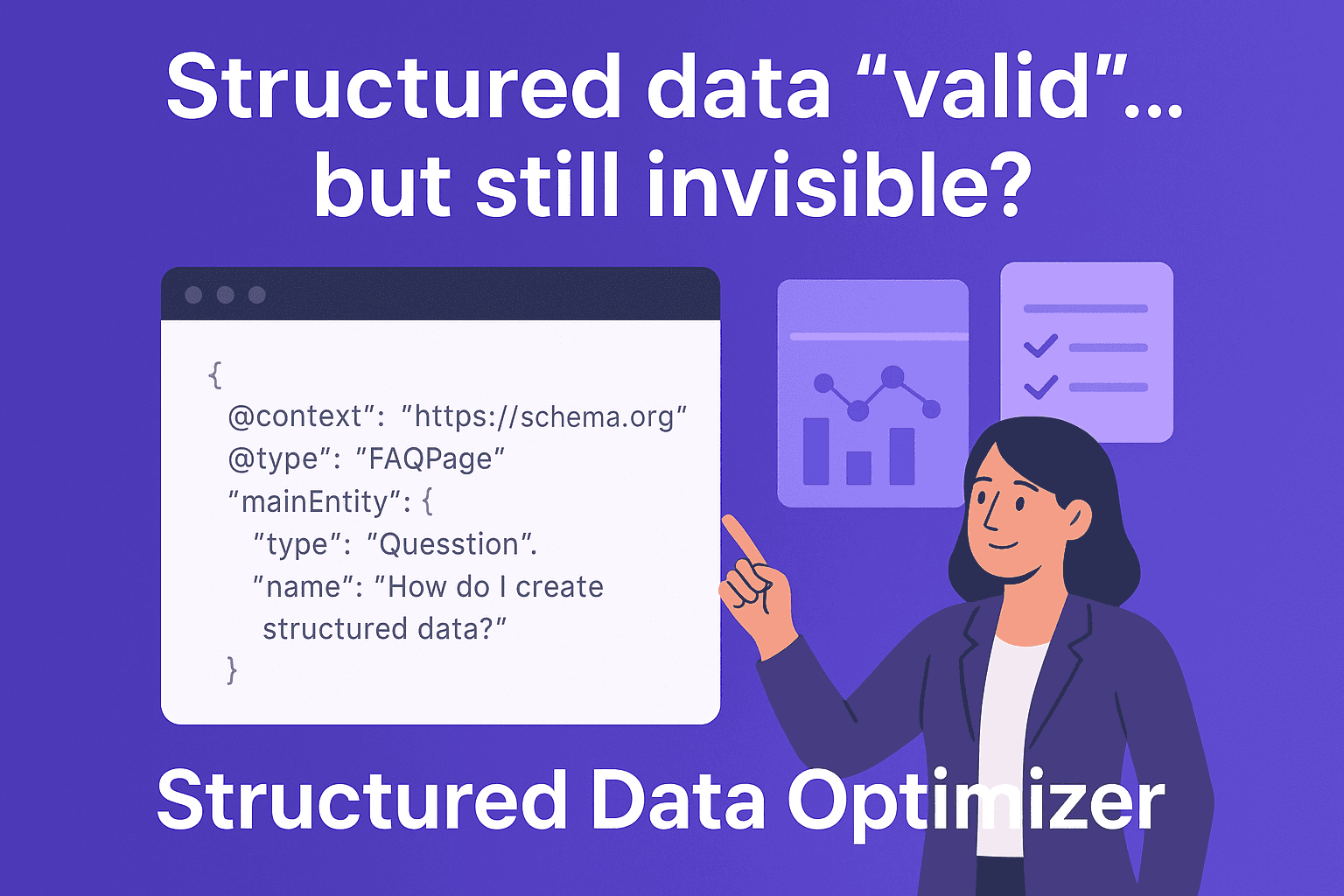
Almost every website has an FAQ section. But despite answering common questions, most FAQs never appear in featured snippets, rich results, or AI-generated answers.
Most agencies still assume that adding an FAQ section is enough for visibility, publish the questions, and search will do the rest. In reality, most FAQs never surface at all. They may be poorly structured, miss search intent, and remain invisible to both search engines and AI systems.
Search continues to shift to AI-generated answers, rich results, and featured snippets, FAQs now need to be built to understand, not just to read.
What Are FAQs/Q&As?
FAQs (Frequently Asked Questions) are sections created to address common user questions about a product, service, or topic. Q&As (Questions and Answers) are the individual question–answer pairs that make up the complete FAQ section.
While FAQs are written for humans, search engines and AI models evaluate them very differently. They look for:
- Clear, specific questions
- Direct answers
- Clean formatting that’s easy to extract
- Accurate structured data that mirrors on-page content
If one or more of these elements is missing or slightly misaligned, FAQs may be overlooked or even when the page itself performs well.
Why Most FAQs Fail to Show Up in Search or AI Answers
Common issues that hold FAQs back:
- Questions that don’t match real search intent
- Answers that are too vague, long, or unfocused
- Poor formatting that isn’t snippet-ready
- Mismatch between on-page FAQs and FAQ schema
- Missing or incomplete FAQPage structured data
Introducing the Q&A Optimizer
The Q&A Optimizer helps evaluate and improve web page’s Q&A content for both SEO and AI-driven answer engines.
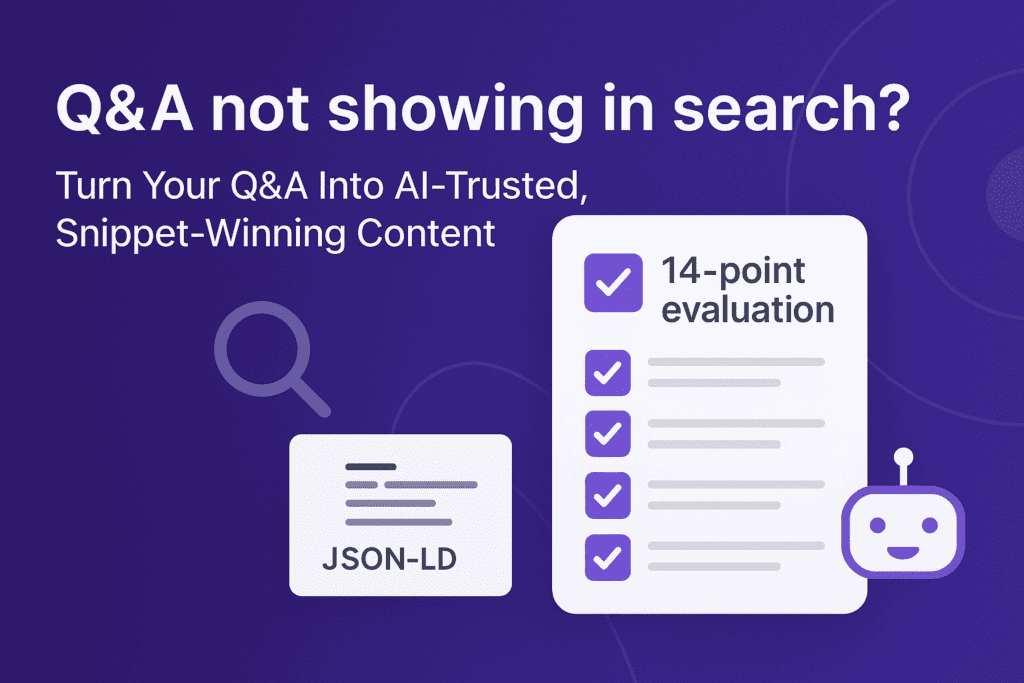
Just enter the webpage URL, and the tool analyzes the page and the existing FAQs/Q&As, scoring them across 14 quality and readiness criteria. It then generates optimized Q&A pairs along with aligned FAQPage JSON-LD, ensuring the content is clear, intent-matched, and eligible for rich results and AI answers.
What the Q&A Optimizer Evaluates
The Q&A Optimizer assesses the web page content across 14 critical signals, including:
- Specificity – Specific details improve trust and make answers more useful to AI systems.
- Query Wording – Natural, conversational questions align better with how users search.
- Actionability – Helpful answers often guide users toward a clear next step.
- Intent Coverage – AI systems surface answers that best match a user’s underlying intent.
- Snippetability – Well-structured answers are easier for AI systems to extract and summarize.
- On-page alignment – AI systems trust answers that are clearly supported by visible page content.
- Tone & Brand Fit – AI systems trust answers that are clearly supported by visible page content.
- Freshness Signals – AI systems prefer up-to-date information for time-sensitive questions.
- Accuracy & Evidence – AI systems favor answers that are clearly factual and well-supported.
- Topical Completeness – Comprehensive topic coverage helps AI systems understand the full scope of your page.
- Clarity & directions – AI and users prefer answers that get to the point quickly and clearly.
- Entity & Terminology Usage – Consistent terminology helps AI systems correctly interpret meaning.
- Internal Linking & UX – Relevant links help users and AI systems navigate related content.
- Structured Data Quality – Accurate FAQ schema helps AI systems interpret Q&A content correctly.
Common Use Cases for an FAQ Optimizer
The FAQ Optimizer is especially helpful when:
- FAQs don’t appear in rich results
- Pages rank but fail to earn snippets
- AI answers pull incomplete or incorrect information
- FAQ sections were added without optimization
- Agencies need measurable post-launch improvements
What You Get in the FAQ Optimization Report
Each FAQ optimization report evaluates web page across 14 critical Q&A checkpoints, which includes:
- An overall FAQ/Q&A optimization score based on the 14-point evaluation
- A detailed breakdown of which checks are passing and which need improvement
- Insights into what’s limiting visibility in rich results and AI answers
- Optimized, AI-ready Q&A pairs (generated or improved from your page content)
- Copy-paste-ready FAQPage JSON-LD aligned precisely with the page
This makes it easy to understand what’s working, what’s missing, and exactly what to implement.
Manual FAQ Writing vs Using a Q&A Optimizer
| Manual FAQs | FAQ / Q&A Optimizer |
| Guess-based | Signal-driven |
| Time-intensive | Fast and scalable |
| Inconsistent schema | Aligned JSON-LD |
| No scoring | Clear benchmarks |
| Hard to scale | Built for teams |
From FAQs That Exist to FAQs That Perform
FAQs are no longer just supporting content.They are visibility assets for search engines and AI answer systems.Without optimization, even well-written FAQs remain invisible. Using a Q&A Optimizer ensures the questions, answers, and structured data work together to earn visibility, not just exist on the page. Purple Leaf makes it easier for agencies to move faster and turn FAQs into content that actually performs.